
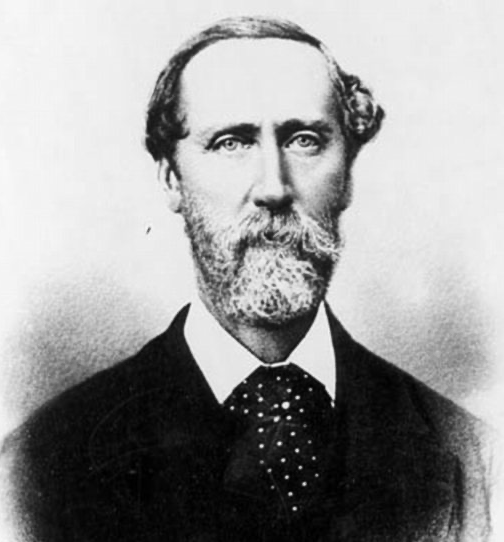
The manor of Wicken once belonged to the Douglas-Pennant family, who were later made the Barons Penrhyn. Farming was amongst their major interests, and on the instructions of Colonel The Hon. E.G. Douglas-Pennant an ‘Important Sale of Shorthorned Bulls’ took place in 1862 at Wicken Park. In fact of the 14 exhibits, (of which most had been bred at Penrhyn Castle), nine were the offspring of ‘the far-famed Bull Marmaduke’, who, through his intimacy with ‘Cows of good breeding and character’, would produce an extended family that was numbered in four figures! In 1866 Colonel Douglas-Pennant was created Lord Penrhyn, but rather more infamous would be the achievements of his eldest son, the 2nd Lord Penrhyn, who, having taken over his father’s mishandled Bethesda slate quarries, in North Wales, caused such a furore amongst the workforce, by his ‘individualistic’ style of management, (with the help of Mr. E. Young, from London), that despite restoring the quarries to prosperity his actions lead to a great strike in 1897. Refusing any form of external interference Lord Penrhyn then closed the quarries, and denied the men permission to form a trade union. In fact only through the income raised from national tours of the Bethesda choir would they support their cause for almost five years, and even when the strike was settled in 1900 a new one then broke out. With the deeper motive of ousting Mr. Young and his quarry manager, this was ostensibly over a contract system, although in dealing with the turmoil even the cavalry had to be called in. Penrhyn was accused of cruelty, but nevertheless he won his libel case and received £500 in damages. Yet despite all the unpleasantness the workmen and staff of the quarry would pass votes of sympathy to Lady Penrhyn and her family when Lord Penrhyn died, aged 71, in 1907. In the church of Wicken, which some three years before he had restored and enlarged, he was buried on Thursday, March 14th, and a large brass could be seen in the chancel floor, dedicated by ‘parishioners and friends.’